The Curious Relationship Between Tea and Cheese
Dairy products are believed to have first arrived in Japan around 1,400 years ago, during the Nara period. Around the same time Buddhism was introduced, so too was the practice of keeping dairy cattle, and what we now know as cheese was referred to by names like "kanraku," "so," "raku," and "daigo."

The name of these products varied depending on how they were processed. "Daigo," made by heating and reducing the skin that forms on milk into something resembling butter, was revered as a milk extract believed to have the power to "cure all illness." It appears in the ancient Buddhist text known as the Rokuharamitsu-kyō, and Kōbō Daishi (Kūkai) is said to have quoted from it, using the term to convey something of profound Buddhist value. This is where the modern Japanese expression "daigomi," meaning the "true essence" or "ultimate flavor" of something, originated.
Milk and "so" also appear to have been consumed at the Heian-era imperial court. Historical writings from the period, including diary entries, note that Fujiwara no Michinaga drank a mixture of so and honey as a kind of medicine.
Meanwhile, the name "Daigo" also appears frequently as a product name within the world of Japanese tea.

Tea, too, is said to have been introduced to Japan around the time of the Kentōshi missions to Tang-dynasty China. Tea cultivation in Japan itself began in the early Kamakura period. The monk Eisai brought tea seeds back from Song-dynasty China, and Myōe Shōnin planted them in Toganoo and Uji in Kyoto, as well as in Daigo — marking the beginning of tea cultivation's history in the Kyoto region. Daigo-ji Temple, known for its autumn foliage and spring cherry blossoms, also draws large crowds each New Year for hatsumōde, the first shrine or temple visit of the year.


The name of these products varied depending on how they were processed. "Daigo," made by heating and reducing the skin that forms on milk into something resembling butter, was revered as a milk extract believed to have the power to "cure all illness." It appears in the ancient Buddhist text known as the Rokuharamitsu-kyō, and Kōbō Daishi (Kūkai) is said to have quoted from it, using the term to convey something of profound Buddhist value. This is where the modern Japanese expression "daigomi," meaning the "true essence" or "ultimate flavor" of something, originated.
Milk and "so" also appear to have been consumed at the Heian-era imperial court. Historical writings from the period, including diary entries, note that Fujiwara no Michinaga drank a mixture of so and honey as a kind of medicine.
Meanwhile, the name "Daigo" also appears frequently as a product name within the world of Japanese tea.
Tea, too, is said to have been introduced to Japan around the time of the Kentōshi missions to Tang-dynasty China. Tea cultivation in Japan itself began in the early Kamakura period. The monk Eisai brought tea seeds back from Song-dynasty China, and Myōe Shōnin planted them in Toganoo and Uji in Kyoto, as well as in Daigo — marking the beginning of tea cultivation's history in the Kyoto region. Daigo-ji Temple, known for its autumn foliage and spring cherry blossoms, also draws large crowds each New Year for hatsumōde, the first shrine or temple visit of the year.
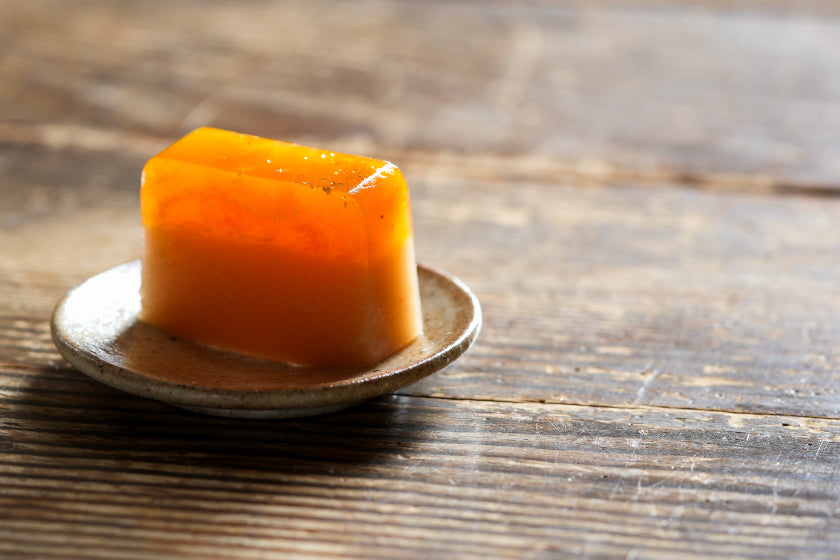
KOTOSHINA Chaya's Cheese Tea uses Uji's organic wakocha (Japanese black tea), made using a process close to traditional methods of old. Cream cheese and heavy cream are whipped together with a touch of sweetness. We invite you to imagine, as you enjoy it, that the people of the ancient capital may have long sensed the unexpectedly wonderful pairing of cheese and tea.
■ KOTOSHINA Chaya
【Organic Wakocha Cheese Tea】
For more details, please see here
■ Bring the Taste of KOTOSHINA Chaya Home